
The Journal · 5 min read
You Check Your Phone 80 Times a Day. Your Sleep Keeps the Score.
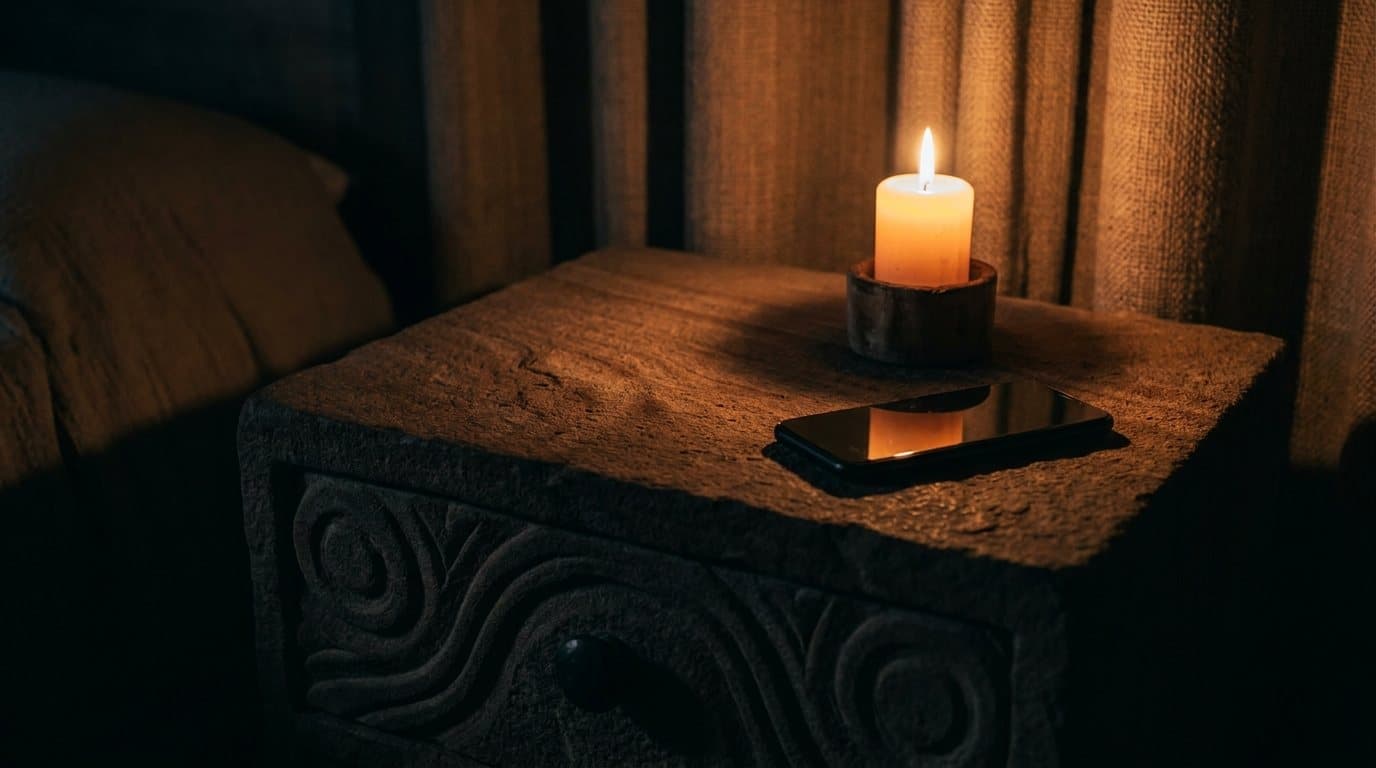
Open your screen time settings and find the number nobody brags about: pickups. For most people it lands between 80 and 150 times a day. Not minutes of use. Times you reached for the device, unlocked it, and asked it for something.
Every one of those pickups is a tiny rehearsal of alertness. You're training a reflex: uncertain moment, reach, check, tiny reward. Run that loop a hundred times a day and you've built an extremely fit habit of vigilance. Then at 10:30pm you lie down in the dark and ask that same nervous system to do the one thing it hasn't practiced all day: nothing.
The last hour is the one that counts
You don't have to fix your whole day. Sleep researchers keep coming back to the same window: the hour before bed. Bright screens in that hour delay melatonin's rise, and the checking habit does something subtler: it keeps offering your brain one more open loop right when it should be closing them.
The Romans didn't have this problem, and not because they were disciplined. Their evenings had architecture: the baths, the meal, the lamps dimming because oil was expensive. The day ended in a sequence, the same one, every night. Nothing about a modern evening ends. The feed doesn't end, the inbox doesn't end, the episode queues the next one. If your evening has no ending built in, your body has to guess, and it guesses late.
Build an off-ramp, not a rule
Screen rules fail because they're subtraction with nothing in the gap. What works is replacement: a short physical sequence that exists only at night, so the sequence itself becomes the signal.
- ✦Pick a phone parking spot that isn't your nightstand. Charging across the room ends the checking loop mechanically, not willpower-ly
- ✦Give the last hour one warm, dim light source. Brightness is the day signal; dimness is the ancient one
- ✦Run a two-minute closing sequence in the same order nightly: room scented, minerals on skin, lights out. Same order matters more than the length
- ✦If you track sleep, watch your pickups-after-9pm count against your sleep score for two weeks. That correlation is yours, not a study's
The point isn't the phone
The phone is just the sharpest example of a day that never signals its own end. The fix is older than the problem: give the night a ritual with a beginning and an end. Ours is three acts (water, air, skin), but the specific acts matter less than their consistency. The more consistent the ritual, the deeper the rest.
Educational content, not medical advice. Our products aren’t intended to diagnose, treat, cure, or prevent any disease. Talk to your physician about persistent sleep trouble.
Keep Reading